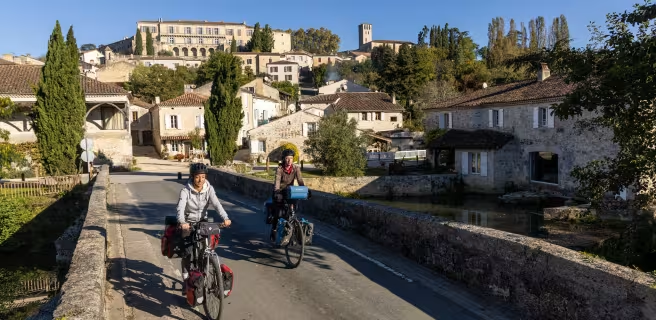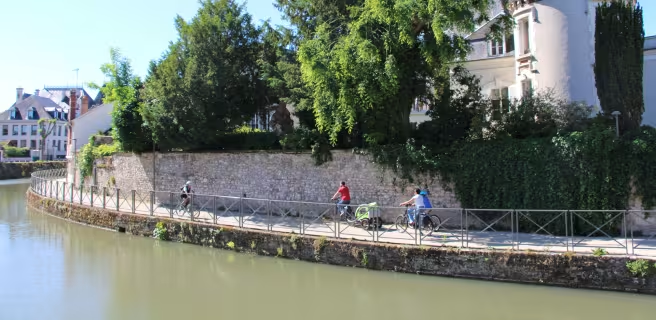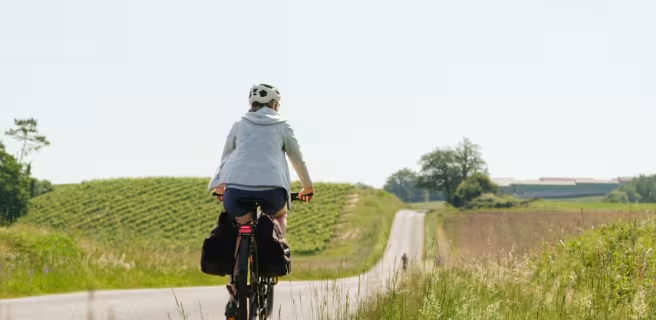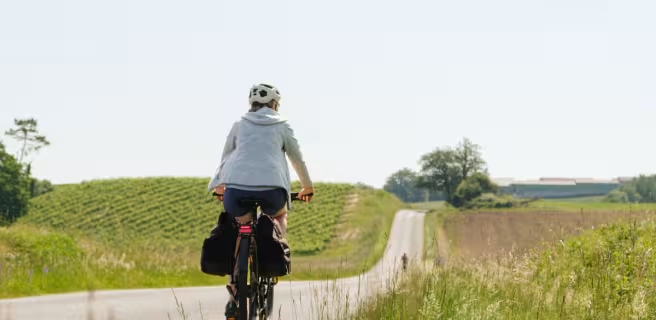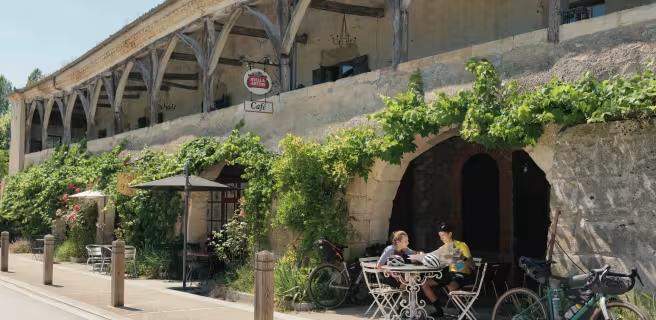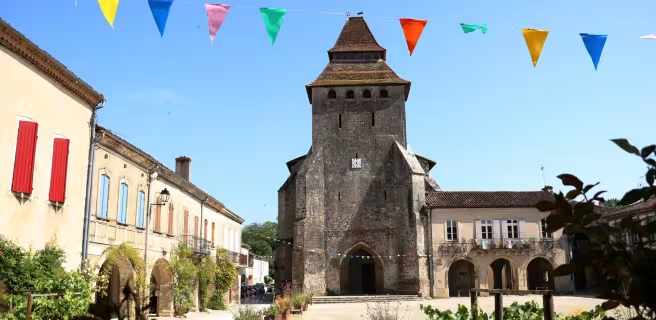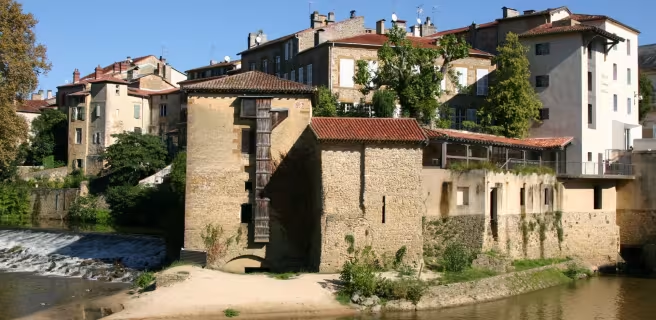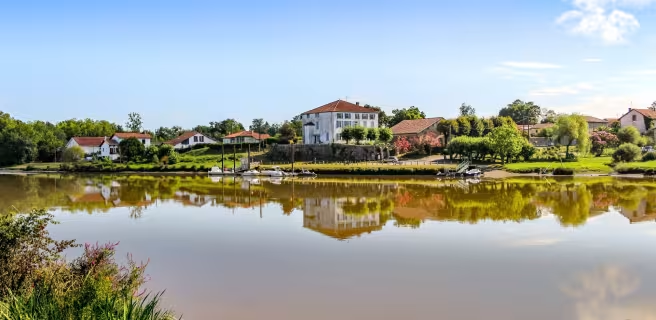
A vélo dans les Landes
Alexandre Leroy
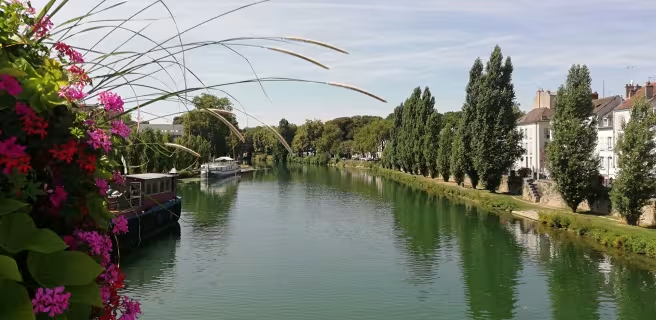
Moret-sur-Loing en Seine-et-Marne
Alexandre Leroy
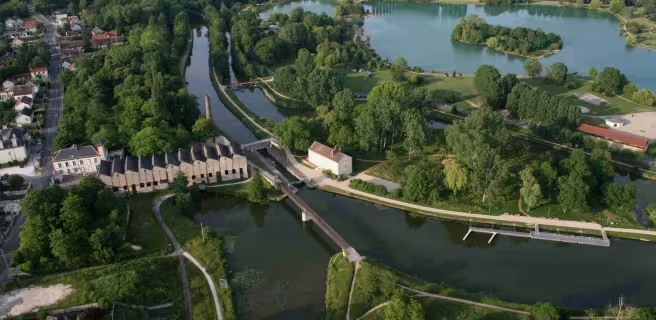
Hébergement dans l'Aisne
Alexandre Leroy
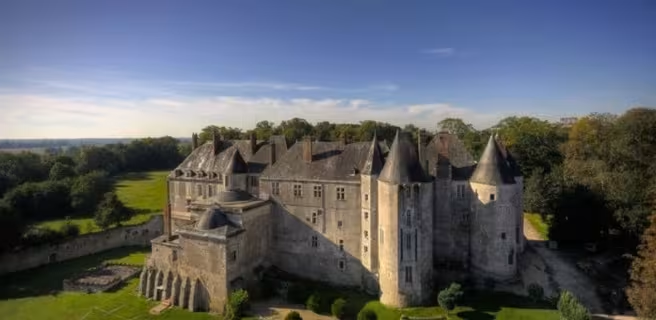
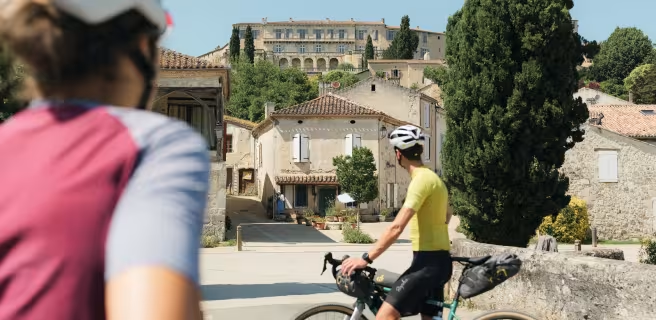
Village de Poudenas dans le Lot-et-Garonne
Alexandre Leroy
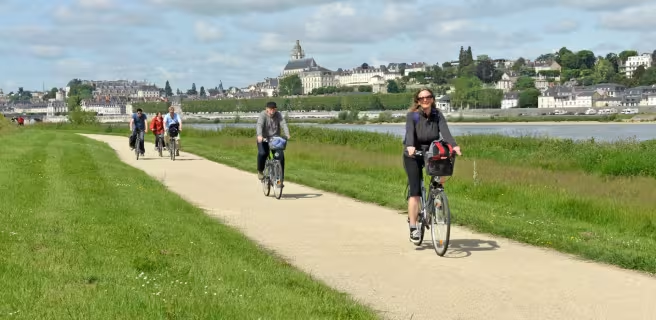
Le long de la Loire dans le Loiret
Alexandre Leroy
Village de Senlis dans l'Oise
Alexandre Leroy
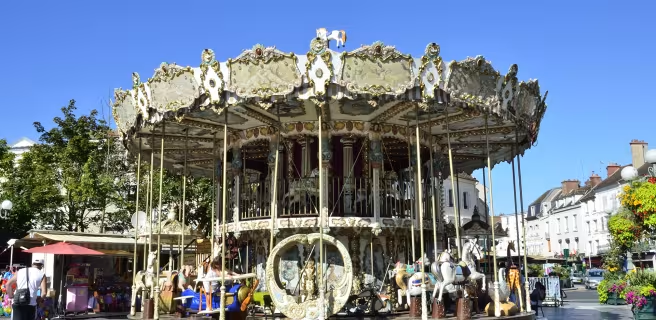
Angoulême en Charente
Victor Dubas
Les Pyrénées-Atlantiques sur La Scandibérique
Timothée Buisson
Relais Eco-Vélo dans le Nord
Achille de Lièvre
Paris
Alexandre Leroy

La Scandibérique

A cycle route that can take you far!

The Scandibérique: over 1,700km of cycle route through France

The Scandibérique is the French part of EuroVelo 3, a cycle route linking Trondheim (in Norway) to Cap-Fisterra passing by Santiago de Compostela (in Spain). It covers over 1,700km, crossing four French regions, 20 French counties (départements) and major towns like Paris and Bordeaux. The route offers cyclists the freedom to experience simple but life-enhancing pleasures, to make all manner of urban and heritage discoveries and to enjoy a path to well-being and reconnecting with the great outdoors… following a cycle route that can take you far!

La Scandibérique in 48 stages

Thuin / Jeumont / Maubeuge

1 Thuin / Jeumont / Maubeuge

32 km
51 min
I begin / Family
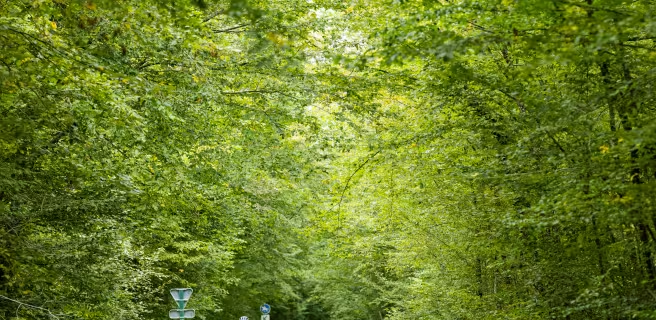
Setting off not far from the Walloon city of Charleroi, this stage makes a fine introduction to the EuroVelo 3 cycle route (which is completely laid out along its 210km through Belgium). You ride through green surrounds, accompanied by the sound of babbling water, passing the villages of Lobbes, Merbes-le-Château and Solre-sur-Sambre, whose historic centre boasts an undeniably interesting heritage. The River Sambre, dotted with locks, invites you to pause frequently, looking at the river boats. Erquelinnes, with its river port, many shops and train station, could also make an appealing entry point to the Scandibérique cycle route. On the horizon, spot the ramparts of Maubeuge, designed by Vauban, Louis XIV’s great engineer.
Maubeuge / Liessies

2 Maubeuge / Liessies

26 km
1 h 44 min
I begin / Family
You may find it hard to leave the intriguing maze formed by Vauban’s amazing ramparts at Maubeuge, but the appealing Avesnois area will make you want to continue your cycling adventure. The greenway, leaving Maubeuge, presents a mix of industrial vestiges, hedgerow-divided fields and forests. As there are many picnic corners along the way, it’s easy to pause to recharge your batteries, or then look in at the Musée du Verre, a glass museum at Sars-Poteries. Those interested might also visit the Musée de la Faïence et de la Poterie in Ferrière-la-Grande. Reaching Lissies, it’s time for a stopover… enjoying a dinner featuring tasty local Maroilles cheese, of course!
Liessies / Hirson

3 Liessies / Hirson

38 km
2 h 12 min
I begin / Family
Leaving Liessies, enjoy a peaceful, wooded start along a greenway. This acts as a good warm-up, as, after Anor, you have to tackle Hirson Forest, in the foothills of the Ardennes Range. The greenway takes you beside lakes with a hint of Canada to them and past racing streams worth photographing, or picnicking beside. This makes a charming, green, undulating valley stretch, a bit like a Switzerland of the North… but seasoned adult or teenage cyclists should be able to take it on without too much trouble! If intrigued by the soaring chimneys of the area’s old textile mills, consider a detour via Fourmies. The last stretch is on a greenway through forests to Hirson, where you reach the Oise Valley.
Hirson (Blangy) / Etréaupont

4 Hirson (Blangy) / Etréaupont

16 km
1 h 03 min
I begin / Family
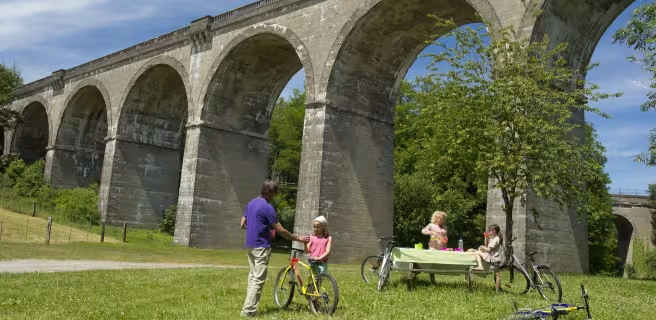
After visiting La Rotonde and La Tour Florentine (major 1920s railway-related constructions), Europe’s largest stretch of bocage, or hedgerow-divided fields, provides a peace setting as you cycle through the Thiérache area, hawthorn hedges, apple orchards and babbling brooks marking the way. The riverside fields are sometimes flooded by the unruly Oise. Ohis Viaduct, with its giant arches stepping over the river, is the most striking feat of engineering on this surprising Axe Vert de la Thiérache.
Etréaupont / Guise

5 Etréaupont / Guise

24 km
1 h 36 min
I begin / Family
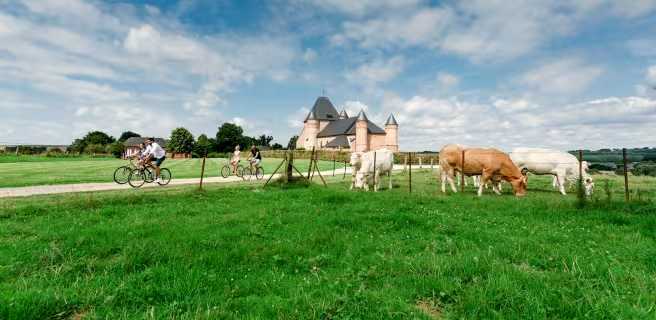
A stage giving you a condensed summary of the Thiérache area’s delights, with its fortified churches, green meadows and unspoilt brick villages. All the way along, remarkably beautiful fortified churches alternate with stretches of pastureland. The end of the stage produces highlights in the form of Beaurain’s magnificent fortified church and the town of Guise, dominated by its impressive medieval keep and home to the progressive cooperative housing project, the 19th-century Familistère Godin.
Guise / Ribemont

6 Guise / Ribemont

25 km
1 h 34 min
I cycle often
Leaving Guise and its castle behind, the route cuts boldly via Macquigny to follow the meadow-lined banks of the Oise as far as Ribemont. For a less direct option, enjoy following the calm, beautiful meanders of the river, evoked by Robert Louis Stevenson in his travel book, An Inland Voyage. Passing steep slopes and charming brick villages, plus Origny sugar factory, the Scandibérique leads you to Ribemont, the village where Enlightenment philosopher Nicolas de Condorcet was born. Park your bike to visit the house where he came into world, now a museum.
Ribemont / Tergnier

7 Ribemont / Tergnier

26 km
1 h 44 min
I begin / Family
Be prepared to be surprised by the Oise Valley! Here, the route passes below seven limestone slopes, at times closer to the meandering river, at times closer to the Canal de la Sambre à l’Oise. All along, appreciate the all too often ignored local heritage of locks, bridge-canals, former mills and protected natural zones boasting abundant flora and fauna. Bloucard Cliff’s steep limestone sides look grandly down on the riverbed 25m below, marking the abrupt end of the agricultural plain extending southwest from Guise, and making quite an impression on cyclists along the route.
Tergnier / Noyon

8 Tergnier / Noyon

24 km
1 h 36 min
I begin / Family
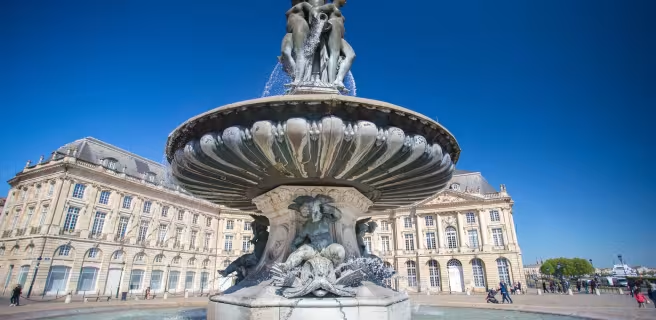
From La Fère to Noyon, you ride along what Robert Louis Stevenson called ‘the Golden Valley’ in his travel book, An Inland Voyage. This Scandibérique stage crosses the middle section of the Oise Valley, lined with broad stretches of hay meadows prone to flooding and where over 200 species of birds nest. Herds are often left to graze happily on the lush grasses here. After crossing Chauny, with its beautiful Art Deco homes and many shops, the route continues alongside the Canal Latéral à l’Oise through verdant lands to Noyon, a little city boasting the oldest Gothic cathedral in this northern part of France, rising above a well-preserved medieval quarter.
Noyon / Compiègne

9 Noyon / Compiègne

29 km
1 h 57 min
I begin / Family
Leaving the little cathedral city of Noyon, the Oise Valley proves bucolic. It’s easy to weave your way along in these parts, seeking out major sites near the route. Nestled at the confluence of the Canal du Nord and the Canal Latéral à l’Oise lies the charming old mariners’ village of Pont-l’Evêque. Soon after, spot the majestic ruins of the Cistercian abbey of Ourscamp rising from the edge of the forest. Next, waterways and lakes act as so many reflective mirrors in any sunshine. The route then continues along magnificent wooded alleys through Laigue Forest and beside the Aisne River’s meanders, up to this waterway’s confluence with the Oise. This is an area where river mariners once ruled the roost!
Compiègne / Pont-Sainte-Maxence

10 Compiègne / Pont-Sainte-Maxence

28 km
1 h 53 min
I begin / Family
Compiègne is set beside forests that extend as far as the Château de Pierrefonds, but leaving town by bike, the route sticks beside the Oise, passing its many river barges. It leads you on swiftly via some dozen lakes created by the sand-extracting industry. Several outdoor leisure centres have been set up around here, between Verberie and Pontpoint; they offer bathing, fishing, even water-skiing, as well as bird observatories and zones where pike can spawn… At Pontpoint, you leave the Oise River and the Route Stevenson®, riding past Le Moncel Royal Abbey to reach the well-shaded Halatte Forest. The Scandibérique route takes you here to a realm where the stag is king!
Pont-Sainte-Maxence / Ermenonville/Ver-sur-Launette

11 Pont-Sainte-Maxence / Ermenonville/Ver-sur-Launette

32 km
2 h 05 min
I begin / Family
Compiègne is set beside forests that extend as far as the Château de Pierrefonds, but leaving town by bike, the route sticks beside the Oise, passing its many river barges. It leads you on swiftly via some dozen lakes created by the sand-extracting industry. Several outdoor leisure centres have been set up around here, between Verberie and Pontpoint; they offer bathing, fishing, even water-skiing, as well as bird observatories and zones where pike can spawn… At Pontpoint, you leave the Oise River and the Route Stevenson®, riding past Le Moncel Royal Abbey to reach the well-shaded Halatte Forest. The Scandibérique route takes you here to a realm where the stag is king!
Ermenonville/Ver-sur-Launette / Bondy

12 Ermenonville/Ver-sur-Launette / Bondy

53 km
2 h 44 min
I cycle often
Take in two distinct atmospheres on this Scandibérique stage. Between Ermenonville and Gressy, you ride through vast cereal and sugar beet fields. From Gressy, you follow the towpath track beside the Canal de l’Ourcq, providing a narrow, distinctive setting, quite separate from the string of suburban towns of Tremblay, Villepinte and Sevran along the way. The route leads past La Poudrerie Forest Park, a green haven of 137 hectares, classed as a Natura 2000 area. After Sevran-Livry Forest Park, the route carries on towards Aulnay-sous-Bois, Bondy and Villemomble; along this stretch, the cycle path runs beside the broader section of the Canal de l’Ourcq, surrounded by urban parts.
Bondy / Corbeil-Essonnes

13 Bondy / Corbeil-Essonnes

42 km
3 h 38 min
I cycle often
From Bondy, the Scandibérique leads you boldly southwards along the Seine, through a mix of natural and industrial landscapes, offering a surprising way to cross Paris by bike! At the Rotonde de la Villette, you switch from following the Canal de l’Ourcq to riding beside the Canal St-Martin. Further southeast, the confluence of Seine and Marne Rivers is marked by the startling hotel complex Huatian Chinagora, built along the lines of Beijing’s Forbidden City. Note the industrial heritage visible alongside the cycle path, many old factories converted to new uses: the Saint-Raphaël Factory has become an offshoot of the University of Paris VI, the Eaux de Paris waste-water works a depot for Paris’s spare art works, while the former EDF Coal-fired Power Station, the Rhône-Poulenc Factory and the Hollander Factory are now home to a theatre company and artists’ studios! Reaching Vitry-sur-Seine, admire the Pont du Port à l’Anglais, completed in 1928, replacing the former ferry that linked the banks of the Seine here. At Choisy-le-Roi, take in the old Choisy train station dating from the first half of the 19th century. Note that there’s a ‘service station’ specifically for cyclists on the quays of Choisy’s industrial port!
Corbeil-Essonnes / Melun

14 Corbeil-Essonnes / Melun

26 km
1 h 43 min
I cycle often
After passing the big former Seine-side mills in the town of Corbeil-Essonnes, the Scandibérique then leads you south along calm riverside stretches, the Seine’s broad meanders lined with woods, the way well shaded. As there are no bridges over the Seine along these parts, this stage proves more peaceful than the preceding ones. Following the Seine’s west bank up to the town of Melun, you pass by some remarkable homes built at the turn of the 19th to the 20th centuries, recalling how prized the banks of the Seine had become for getting away from the city bustle. Many painters, writers, actors and stars were tempted by the charms of these parts to come and stay here!
Melun / Fontainebleau

15 Melun / Fontainebleau

20 km
1 h 18 min
I begin / Family
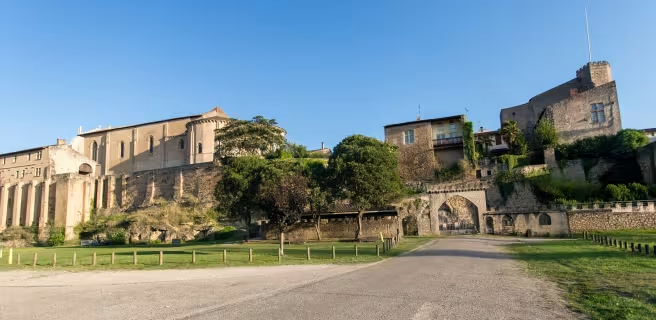
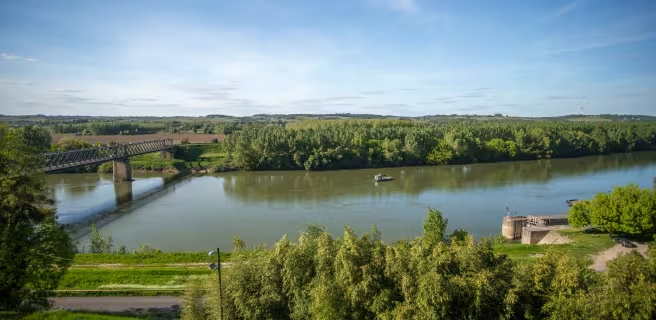
This stage offers a symphony of blues and greens, as you ride between the Seine and the vast Fontainebleau Forest. Cycling between these waters and woods proves a treat for the eyes, and for the lungs, as you breathe in the clean air. The Bois-le-Roi outdoor leisure centre provides an ideal spot at which to unwind a while. A bit further on, Samois-sur-Seine is one of the most beautiful villages in the Ile-de-France Region, a joy to behold… and, should you pass through in June during the Django Reinhardt Festival, a thrill for the ears. The royal town of Fontainebleau counts as a great spot for a stopover; leaving the next morning you’ll feel you’ve topped up your red blood cell count the previous day!
Fontainebleau / Nemours

16 Fontainebleau / Nemours

30 km
2 h 02 min
I begin / Family
At the level of St-Mammès, you shift from the Seine to follow the Canal du Loing. This stage is quieter than the previous one, but the surfacing is rough in parts. Moret-sur-Loing has a bike museum at which cyclists along the Scandibérique may wish to pay homage, while Nemours is proud of its very complete museum dedicated to prehistory in the Ile-de-France Region. Both towns boast a remarkable medieval heritage and are well worth a proper stop. Riders, do make the most of a pause along the charming Canal du Loing before heading further south along the Scandibérique cycle route.
Nemours / Montargis

17 Nemours / Montargis

34 km
2 h 14 min
I begin / Family
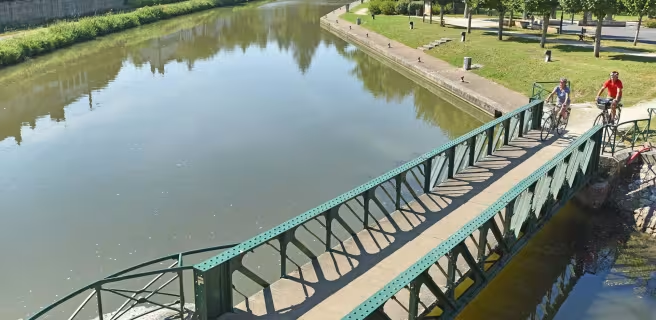
The Scandibérique continues through the Gâtinais area, along the towpath beside the Canal du Loing. This canal crosses gentle landscapes, with a mix of woods, fields and lakes. At the level of the hamlet Les Varennes, to enjoy a recreational break, ride over to the outdoor leisure centre at Souppes-sur-Loing, bathing here a treat on hot days. Also consider a detour to the historic fortified town of Château-Landon, with its interesting heritage. After the hamlet of Pont de Dordives, the cycle route reaches Buges Lock, where the Loing, Briare and Orléans Canals meet. Ride on to the town of Montargis, nicknamed the ‘Little Venice of the Gâtinais’.
Montargis / Rogny-les-Sept-Écluses

18 Montargis / Rogny-les-Sept-Écluses

34 km
2 h 18 min
I begin / Family
Leaving Montargis, you change canal, the Scandibérique leading you on via the towpath beside the Canal de Briare. The Loing River meanders on by next to the canal, providing a green setting along this most peaceful of stages. Greet the lock-keepers and those on boats on the canal as you head down this friendly waterway, the route dotted with charming Gâtinais villages. You reach the highlight of this stage of the Scandibérique adventure at Rogny les 7 Écluses, the name giving away the reason for this village’s fame – its flight of seven locks! Do pause here for a picnic, taking in the grand view.
Rogny-les-Sept-Écluses / Briare

19 Rogny-les-Sept-Écluses / Briare

22 km
1 h 32 min
I begin / Family
From Rogny-les-7-Écluses, the Scandibérique continues to follow the course of the Briare Canal, first taking you beside the Étang-Neuf supply channel running parallel to Rogny’s flight of seven locks. While waiting for the definitive route, a provisional route guides you between Rogny-les-Sept-Écluses and the place called "Le Petit Chaloy". Engineering constructions put in place for the benefit of the canal’s boatmen are dotted along this stretch, which proves a delight for nature lovers too. Briare is renowned for its historic bridge-canal and its boating tourism, plus it’s the place where the Scandibérique joins the Loire à Vélo route, in a picture-postcard setting!
Briare / Sully-sur-Loire

20 Briare / Sully-sur-Loire

41 km
2 h 42 min
I begin / Family
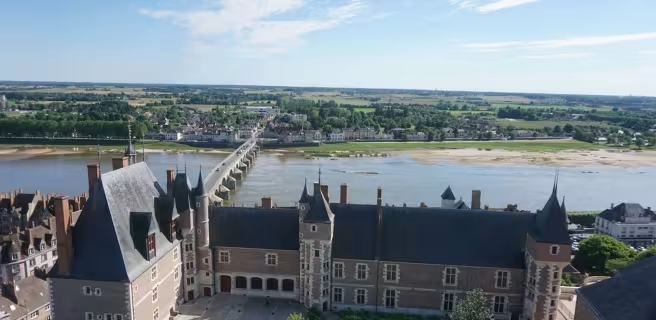
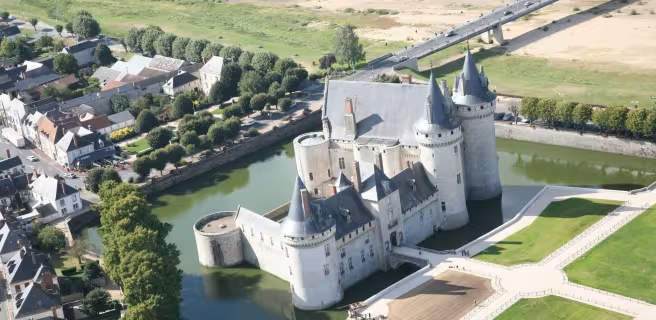
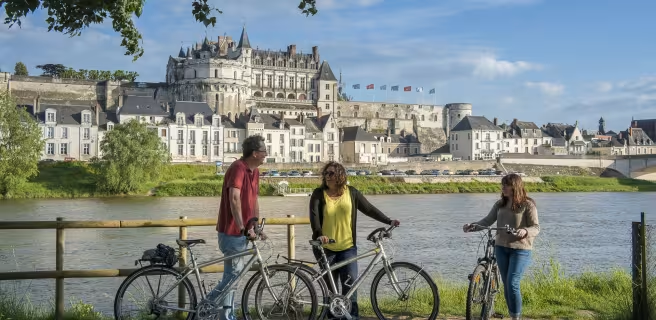
You couldn’t wish for a more elegant link between the Scandibérique and Loire à Vélo cycle routes than via the majestic Briare bridge-canal. Next, continue your cycling cruise in the direction of the Atlantic by following the Loire! Gien, with its fine stone bridge over the great river, is well worth visiting for its château, containing a museum on hunting, and its pottery museum, honouring local crafts. Then you enter the hallowed swathe of the Loire Valley recognized by UNESCO as a World Heritage Site; the fabulous Château de Sully-sur-Loire marks its eastern boundary in splendid fashion, a memorable guard overseeing the Loire and the many cyclists following the serpentine meanders of France’s most regal river so closely.
Sully-sur-Loire / Orléans

21 Sully-sur-Loire / Orléans

51 km
3 h 17 min
I begin / Family
After enjoying the green surrounds of the Château de Sully-sur-Loire, this Scandibérique stage leads you beside the Loire, drawing great meanders up to Orléans. Enjoy rustic stops at Germigny-des-Prés Church and Fleury Abbey, the latter dominating St-Benoît-sur-Loire. At Châteauneuf-sur-Loire, the Musée de la Marine de Loire focuses on river mariners, while the grounds contain rare species of trees and provide a fine picnic spot. Cycling along the Loire-side levée to Jargeau affords you filmic views on the river. Heading for Orléans, the city’s distinctive silhouette dominated by its cathedral comes into view on the north bank. Before reaching its urban bustle, the outdoor leisure centre on Ile Charlemagne offers you a green break where you can unwind.
Orléans / Meung-sur-Loire

22 Orléans / Meung-sur-Loire

20 km
1 h 28 min
I begin / Family
A main gateway to the Loire Valley, Orléans is a city where the Loire and French history meet dramatically. The town is welcoming, its centre geared to pedestrians who can enjoy a slow pace and a peaceful atmosphere exploring the historic quarters and Ste-Croix Cathedral. After a good wander, time to get on your bike again, starting by enjoying discovering the lovely confluence of Loiret and Loire Rivers. Next, the route takes you in part along a stretch of Loire levée, allowing you to look across the wide agricultural and market-gardening lands up to Meung-sur-Loire. In this historic town, the Château de Meung-sur-Loire’s dungeons once housed disruptive medieval poet François Villon!
Meung-sur-Loire / Blois

23 Meung-sur-Loire / Blois

43 km
2 h 50 min
I begin / Family
Beaugency, a member of the association Les Plus Beaux Détours de France, boasts an unmissable heritage, including its 12th-century bridge with 23 arches spanning the Loire. In summer, its quays transform into a beach, and a maize field turns into a labyrinth! Families cycling the route will love stopping here. Elsewhere, the striking contrast between picturesque villages and castles and St-Laurent-des-Eaux nuclear power station reminds tourists of the Loire’s shifting importance down the centuries. Reaching the bridge at Muides-sur-Loire, either follow the Loire closely as far as Blois, or head away from the Loire’s south bank, not sticking faithfully to the Scandibérique, to explore Loire castles covered by Les Châteaux à Vélo…
Blois / Amboise

24 Blois / Amboise

43 km
2 h 36 min
I begin / Family
The Scandibérique route leaves Blois along the Loire’s south bank, going via vine-covered slopes to Candé-sur-Beuvron. The Beuvron River then becomes your thread until rejoining the regal Loire close to the perched Château de Chaumont-sur-Loire, surrounded by extraordinary gardens. Next, you ride past prestigious vineyards thriving beside the Loire. By now, you’ve entered beautiful Touraine, with its cliff-side caves and exceptional wineries, inciting you to stop for a tasting. The Château d’Amboise served as childhood home for major French Renaissance prince, the future François I; on becoming king, he called on Leonardo da Vinci to join his court, offering him the Clos Lucé as his home. This stage takes you to the heart of the French Renaissance.
Amboise / Tours

25 Amboise / Tours

27 km
2 h 03 min
I begin / Family
On this Scandibérique stage, to see the startling Chanteloup Pagoda, you need to follow the link towards the Cher River. Otherwise, on this stage, you stay close to the Loire, with tempting wines to be found in the many cliff-side cellars and restaurants along the way, so resist over-indulging (as well as the sun), or else you may risk arriving at an unseemly hour at your accommodation! The gentle capital of Touraine, Tours, proves very welcoming, its historic centre teeming with fine culinary stops and things to discover. To carry on downstream, cycle down Avenue de Grammont, known for hosting the final sprint in the classic Paris-Tours cycle race. This stage then takes you along some gravel stretches and portions along beautiful slopes covered in vines. Enjoy the heady mix of Loire local traditions and new sporting opportunities along here!
Tours / Sainte-Maure-de-Touraine

26 Tours / Sainte-Maure-de-Touraine

44 km
2 h 54 min
I cycle often
The Loire, Cher and Indre are the three major rivers you’ll ride alongside, in that order, on this Scandibérique stage leading you south. You cross an agricultural plateau, the town of Ste-Maure de Touraine at its heart, to link up with the Vienne Valley. Following minor roads from village to village, enjoy remarkable discoveries, some marking the time Frankish leader Charles Martel fought off Arab invaders in these parts in the 8th century. Spot parks, keeps, churches, statuary, reliquaries… The markets are packed with fine local produce. On a picnic, savour different Sainte-Maure goat’s cheeses (laitier and fermier), with their distinctive cylindrical shape and straw through the middle. At the end of your meal, see who draws the short straw to have to transport all the local goodies you’ve bought to your next stopover!
Sainte-Maure-de-Touraine / Châtellerault

27 Sainte-Maure-de-Touraine / Châtellerault

41 km
2 h 45 min
I cycle often
Here, following the Scandibérique brings you back beside a river, this time the Vienne, at Marcilly-sur-Vienne. This stage follows its west bank, offers views of lovely landscapes. Vaux-sur-Vienne, climbing the slope from the river, is a village in a lovely green setting from which to embark on walks. Finally, the town of Châtellerault comes into view. Before and after World War I, it was known for manufacturing Lebel guns; after the factory closed in 1968, it was subsequently transformed into an ice-skating rink and cultural space, a sign of peace for future generations.
Châtellerault / Lussac-les-Châteaux

28 Châtellerault / Lussac-les-Châteaux

58 km
3 h 50 min
I cycle often
Châtellerault boasts an impressive historical legacy and on a stopover here you can even discover its industrial heritage. As well as the charming town centre where the fully restored Italian-style Blossac Theatre stands out alongside Renaissance-style monuments, the former arms factory, with its two imposing brick chimneys, also grabs visitors’ attention. Continuing along the Scandibérique, many surprises await, notably at Vouneuil-sur-Vienne, with Le Pinail Nature Reserve, or then at Chauvigny, its medieval centre rising from its rocky outcrop. Lastly comes Lussac-les-Châteaux and the five mighty pillars of the former drawbridge to its single château!
Lussac-les-Châteaux / Confolens

29 Lussac-les-Châteaux / Confolens

53 km
3 h 31 min
I cycle often
From Lussac-les-Châteaux to Availles-Limouzine, the Scandibérique follows small, bucolic roads with little traffic. The rolling plains start to have more pronounced slopes, meaning you have to make more physical effort, plus the landscapes will take your breath away! Look out for spots beside the Vienne from which you can go bathing in the river for a refreshing break. The majestic viaduct at L’Isle-Jourdain takes you across the river, which you then leave behind, riding on to Availles Limouzine. The art works scattered around the Château de Lessac are bound to leave you thinking. At the town of Confolens, give your ‘pins’ a break by taking the little tourist train!
Confolens / Massignac

30 Confolens / Massignac

38 km
2 h 31 min
I cycle often
Leaving Confolens’s medieval bridge behind, the route takes you beside the Vienne River up to Exideuil, the way revealing more and more of the Charente area’s character, the Château de la Chétardie even being the seat of a Confrérie du Cognac, a fraternity for the famed brandy spirit! In this eastern part of the county, or département, of Charente, the lakes of Lavaud and Mas Chaban were created to help regulate the lack of water in the Charente River certain summers; they also offer nautical activities and places for bird-watching, nice ways to take a break before riding on to Massignac, just a few kilometres on, and a place for a stopover on the route.
Massignac / Marthon

31 Massignac / Marthon

35 km
2 h 19 min
I cycle often
This stage takes you along minor county roads offering lovely views, but steep climbs too! Along the way, the valleys are deep, as you’re riding along the western foothills of the Massif Central Range. The Tardoire River can rise suddenly in heavy rain. At Montbron, though, there’s a lovely watersports centre from which you can launch onto the waters in a canoe. Marthon is where the Scandibérique and La Flow vélo cycle routes connect. It’s a village that has preserved its covered market and an historic keep known as the Tour du Breuil. There are shops here, so you can stock up here before continuing along the route.
Marthon / Angoulême

32 Marthon / Angoulême

32 km
2 h 06 min
I begin / Family
The Scandibérique now doubles up with La Flow Vélo cycle route heading to France’s cartoon capital, Angoulême. Leading you through the heart of the Bandiat Valley, the Coulée d’Oc Greenway runs through countryside dotted with little villages marked by Romanesque churches. Shortly after Chazelles and the Quéroy Caves, the route then heads off towards Angoulême along the Touvre Valley. Do take the time to view this river’s startling sources, springing up in natural pools from subterranean natural reservoirs. The city of Angoulême is more than a mere stopover for cartoon fans, much more a pilgrimage for aficionados of the so-called 9th art!
Angoulême / Barbezieux-Saint-Hilaire

33 Angoulême / Barbezieux-Saint-Hilaire

48 km
2 h 52 min
I begin / Family
Once you’ve enjoyed your fill of cartoons in Angoulême, including on its giant painted walls, time to pick up the thread of the Scandibérique again. The route crosses the city peacefully via the Coulée Verte beside the Charente, which you continue to follow, the river’s banks dotted with little ports and locks, the slopes above producing cognac and pineau. Châteauneuf-sur-Charente is well worth a halt, one of the historic ports for transporting cognac, a spirit known around the world since 1700, and a leading French export today. The final stretch of this first stage connecting two renowned viticultural areas, the Charente and the Bordelais, continues through vineyards to Barbezieux-St-Hilaire.
Barbezieux-Saint-Hilaire / Clérac

34 Barbezieux-Saint-Hilaire / Clérac

39 km
2 h 34 min
I begin / Family
This Scandibérique stage leads via the county of Charente’s vineyards on to forests typical of the neighbouring county of Charente-Maritime and continues to the border between the historic areas of the Saintonge and the Périgord. Cruise easily along the Galope Chopine Greenway from Barbezieux St-Hilaire to Clérac, the way increasingly wooded. The medieval Château de Montguyon, an imposing fort ravaged by time, offers a tempting reason to deviate slightly from the Haute-Saintonge greenway. Just a few arrows’ lengths further on, cycling into the heart of the Double Saintongeaise Forest (40,000 hectares of woods stretching between Montguyon, Montlieu la Garde and Montendre) you reach Clérac. This stage provides plenty of invigorating country air!
Clérac / Libourne

35 Clérac / Libourne

46 km
3 h 05 min
I begin / Family
Clérac offers a haven of peace, nestled in its green wooded corner at the southern edge of the Saintonge area. The Scandibérique then leads you into the Bordelais area. At first, up to Guîtres, as well as the green of the pines, the bright white of former kaolin clay mines stands out, while the lakes that have formed in these pits reflect the deep blue of the sky. Next, the scenery changes, as you cycle beside the Isle River, the slopes covered with world-famous vineyards as you approach Libourne, an historic port at the confluence of the Isle and Dordogne Rivers. By now, the feel is very southern!
Libourne / Créon

36 Libourne / Créon

39 km
2 h 29 min
I cycle often
This Scandibérique stage is associated with luscious ruby reds, as you cross the dense vineyards of the St-Emilion area, or Jurisdiction, a UNESCO World Heritage Site! The wines here age extremely well, turning darker with age. Wander around St-Emilion’s spectacular, steep, ramparted streets before crossing the Dordogne River. You then climb through more vineyards to join the Roger Lapébie Greenway. At the spot where you join this beautiful path for non-motorized traffic, take care to turn right towards Créon to then carry on smoothly towards Bordeaux; if you turn left, you head off towards the town of La Réole and the Canal des 2 Mers à Vélo cycle route… but that’s a completely different cycling adventure!
Créon / Bordeaux

37 Créon / Bordeaux

25 km
1 h 38 min
I begin / Family
The vine-covered limestone plateau between the Garonne and Dordogne Rivers east of Bordeaux is known as l’Entre-deux-Mers, the area ‘between the two seas’! The Roger Lapébie Greenway takes you amidst vineyards, via the east bank of the Garonne, to the great wine city. Cross the Pont de Pierre, the town’s oldest bridge, for the historic quarters of St-Michel and St-Jean. Bordeaux is a great place to explore by bike before continuing on the Scandibérique. This beautifully modernized town merits a cultural break of several days. Once you’ve admired your reflection, together with that of this handsome city, in the mirrored pool beside the quays one last time, it’s time to head south for the landscapes of Gascony’s Landes, including the largest man-made forest in Western Europe.
Bordeaux / Hostens

38 Bordeaux / Hostens

53 km
3 h 29 min
I begin / Family
Bordeaux makes for such a fine city break, parting may be hard, but continuing along the Scandibérique, the cycle route via the Bègles tramline and through the little valleys of the Eau Bourde and the Eau Blanche makes it easy to ride south out of town. The splendid Cayac Priory at Gradignan, once a refuge for pilgrims, is worth a proper visit. Then head for Hostens via the famed vineyards of the Pessac-Léognan area. As you reach La Brède, it would be only fitting to uncork a bottle of finest Graves white in homage to Montesquieu, a major 18th-century political philosopher from here, and to visit his family château. After Graves’s vineyards come a mix of hardwood and pine woods. The greenway from La Brède leads peacefully down to Hostens.
Hostens / Langon

39 Hostens / Langon

45 km
3 h 00 min
I begin / Family
After enjoying all the outdoor possibilities at Hostens, the Scandibérique continues south, via a long stretch of greenway, to the town of Bazas and, thanks to a recent extension, as far as Langon. This good-quality greenway in fact makes it possible to go from the Bassin d'Arcachon by the coast to the Canal de Garonne (via Langon and Castets-en-Dorthe). You cycle along a really lovely path through quiet pine forests. Note how different plots are planted with pines of different ages. While the colour green dominates, when heather and broom flower, Impressionist touches of yellow, white, pink, red and purple are added to the picture. If heading out quietly early in the morning, you may encounter deer on your path.
Langon / Buzet-sur-Baïse

40 Langon / Buzet-sur-Baïse

68 km
4 h 24 min
I cycle often
From Langon, the route joins the Canal de Garonne at Castets-en-Dorthe. Cycling along the next stretch, you can chart the progress of your reflection in the canal’s waters! From Fontet to Buzet-sur-Baïse, the Scandibérique follows the same path as the Canal des Deux Mers à Vélo cycle route. It’s easy to ride at a steady pace, although you may encounter quite a number of other cyclists as you pedal along in the shade of the plane trees. You pass a delightful array of bridges, locks, vineyards and orchards up to the port at Buzet-sur-Baïse, at the end of this stage.
Buzet-sur-Baïse / Mézin

41 Buzet-sur-Baïse / Mézin

31 km
2 h 23 min
I cycle often
The Scandibérique route now heads for the Pyrenees, taking you into the historical territories of the young Henri de Navarre, who would become King Henri IV of France from 1589 to 1610. After greenways, you ride along peaceful minor roads crisscrossing the Pays d’Albret area of Gascony, made up of a mosaic of lands. From the fortified bastide village of Vianne to Barbaste and its fortified Moulin des Tours, on to Mézin, a perched village, there are many little southern gems a stone’s throw from the route. Gascon culinary tradition encourage you to sample the spirit Armagnac, Buzet wines, and, if you’re up for it, foie gras. This is a blissful area for a cycling adventure!
Mézin / Escalans

42 Mézin / Escalans

23 km
1 h 32 min
I cycle often
From Mézin to Sos, the Scandibérique route runs in part along a greenway beside the Gélise River, the path shaded, the atmosphere quite unspoilt. The private Château de Poudenas with its Tuscan looks is the first curiosity you ride past. After Sos, you cycle along quiet county roads. As you approach Escalans Gabarret, you get closer to the edge of the great Landes Forest, the scent of its pines wafting over to you. Come evening, enjoy succulent local specialities on your stopover to regain your energy.
Escalans / Mont-de-Marsan

43 Escalans / Mont-de-Marsan

58 km
3 h 52 min
I begin / Family
Welcome to the county of Landes, a land full of traditions, offering opportunities aplenty to enjoy the place’s conviviality, with many ferias and places at which to savour local specialities. From Escalans, the Scandibérique heads for Labastide d’Armagnac, a medieval village boasting a rich traditional heritage, nestled in the midst of vineyards that produce the oldest spirit in France. Every self-respecting cyclist should pay homage at the Chapelle des Cyclistes before tasting (in moderation, of course!) Armagnac made by a local producer. Cycling on towards Mont de Marsan, enjoy little detours to the village of Bougue and the archaeological site of Castets. At Mont-de-Marsan, the figurative sculptures at the Musée Despiau Wlérick, plus, not far off, but in the midst of forest, Marsan Lake, with its outdoor leisure centre, are two good reasons for prolonging your stay here.
Mont-de-Marsan / Dax

44 Mont-de-Marsan / Dax

68 km
4 h 30 min
I begin / Family
You might think you’ve arrived in Spain earlier than expected along the EuroVelo 3 cycle route, looking around Mont-de-Marsan on a sunny day, what with its bullring and adverts for its flamenco festival! However, the Musée Despiau Wlérick, with its figurative sculptures, the Parc Jean Rameau, and the well-laid-out banks of the Midouze River, with its gentle quays, are southwestern French in feel. Riding on towards Dax, you might explore the local religious heritage, notably at Carcarès-Sainte-Croix and Saint-Vincent-de-Paul. For the more adventurous, leave your bikes a while to take a canoe trip down the Midouze, or to enjoy a hike in the Adour’s barthes, wetland meadows characteristic of the areas around Saint-Vincent-de-Paul and Pontonx-sur-l’Adour. If after something more relaxing, in Dax, at the end of this stage, recharge your batteries at the thermal spa baths.
Dax / Urt

45 Dax / Urt

55 km
3 h 46 min
I begin / Family
A Scandibérique stage offering you the chance to enjoy the thermal pleasures of the resorts of Dax, Saint-Paul-lès-Dax and Saubusse. Following the Adour by bike, riding along towpaths converted into cycle paths, you reach the village of Saubusse. A former river trading and fishing port, it stands in a lovely setting, tempting for a walk or a drink at a water-side terrace. At Josse’s port, you could opt to go out on the river in a boat or a canoe. There’s something for everyone in these parts, with the many outings, traditions and gastronomy on offer, all in striking landscapes carved out by the Adour’s waters and by Pyrenean torrents.
Urt / Saint-Palais

46 Urt / Saint-Palais

58 km
3 h 42 min
It climbs
Continuing beside the Adour and Bidouze Rivers, the Scandibérique cycle route brings to mind the river trading of centuries past, as you ride past the little ports of Guiche, Bidache and Came. Almost half-way along, you’re suddenly made to climb above Came and the Pyrenees Mountains appear on the horizon as ascents and descents follow. The perched villages dotted around display their fine architectural heritage, while typically Basque architecture stands out as you approach Saint-Palais, a picturesque little town that makes a lovely stopover beside the Bidouze. You might push further, into the valley of the Gave d'Oloron torrent, giving you a taste of the different, Béarn culture. Looks change so fast in these parts.
Saint-Palais / Saint-Jean-Pied-de-Port

47 Saint-Palais / Saint-Jean-Pied-de-Port

37 km
2 h 19 min
It climbs
Immediately on leaving Saint-Palais, ride on to Saint-Sauveur Hill, where the Cross to Xibalterre or Gibraltar (the name for St Sauveur in the Basque language!) marks the spot where several pilgrimage routes to Santiago de Compostela (in northwest Spain) meet. All along this stage, you’ll spot many markers for this extremely popular pilgrimage, still much-loved today and rich in heritage. Both cyclists and walkers will appreciate the many related structures dotted along the climbs and descents to Saint-Jean-Pied-de-Port, not just crosses, but chapels, churches, ruined hospices and villages packed with memories, as well as countless gîtes to stop at. The number of walkers and cyclists sharing this track has been growing consistently, showing what a major European route the Scandibérique - EuroVelo 3 is. At the end of the stage, you enter Saint-Jean-Pied-de-Port via the Porte Saint-Jacques gateway; the cobbled street taking you down this way makes for a dramatic arrival!
Saint-Jean-Pied-de-Port / Roncevaux

48 Saint-Jean-Pied-de-Port / Roncevaux

21 km
1 h 37 min
It climbs
Leaving behind the southern fortified gateways of Saint-Jean-Pied-de-Port, you head towards a famous pass into Spain, the Col de Roncevaux, or Roncevalles, known as the Puerto de Ibañeta in Spanish. For cyclists, the challenge is taking on a true mountain pass. From the village of Arnéguy, where you leave France, it’s then 18km of climbing to get over this Pyrenean col. Even if the slopes are relatively reasonable (the gradients between 4.5% and 7% on average), you need stamina riding through the beech forest of the Valcarlos Valley, so change gear accordingly. The effort brings to mind the famed medieval French epic, La Chanson de Roland, telling of the Basque attack here, back in the 8th century, on Charlemagne’s Frankish army returning from attacking Iberia, including Basque Pamplona. Since the 13th century, Roncevalles collegiate church has, though, been dedicated to welcoming pilgrims and travellers.

Find my Accueil vélo

Accueil Vélo is a brand that guarantees quality services for cyclists along the Scandibérique.